
The Best Drawing Books for Beginners
There’s something different about learning to draw from a book. You can fold down the corner of a page that clicked for you. You can prop it open on your desk and glance over while you practice. You can scribble notes in the margins when you finally understand why your proportions were off.
In an age of YouTube tutorials and online courses, drawing books might seem old-school—but they’re still one of the most effective ways to learn. No buffering, no ads, no “smash that like button.” Just you, the page, and focused instruction from artists who’ve spent decades teaching others how to see and draw.
But here’s the problem: walk into any bookstore (or browse Amazon), and you’ll find hundreds of drawing books. Some are incredible. Many are forgettable. A few are actively confusing for beginners.
So let me give you my recommendations. These 8 books are the best drawing books for beginners—tried, tested, and recommended by art teachers and self-taught artists alike. Whether you’re a teenager picking up a pencil for the first time or an adult who’s always wanted to learn, there’s a book here that’ll work for you.
Why Learn to Draw Books? The Science Behind It.
Before we go over my list of the best drawing books for beginners, let’s talk about why physical books are still worth using when you could just watch free videos online.
Physical engagement improves retention. Research published in Educational Psychology Review found that students who took notes by hand retained information better than those who typed notes on a laptop (Mueller & Oppenheimer, 2014). The same principle applies to drawing books: when you’re flipping pages, reading instructions, and referring back to diagrams, you’re engaging more actively than passively watching a video. Your brain has to work harder to translate written instruction into action—and that deeper processing creates stronger learning.
No screen fatigue. If you spend all day on a computer for work or school, the last thing you want is more screen time. Books give your eyes a break. You can practice drawing for an hour with a book propped beside you without the eye strain that comes from toggling between a video tutorial and your sketchbook.
Work at your own pace—truly. Yes, you can pause a video, but there’s psychological pressure to keep up. With a book, there’s no timer running. You can spend three days on one exercise if you need to, or breeze through a chapter in an afternoon. No one’s watching, no algorithm is judging your “completion rate.”
Fewer distractions. Open YouTube to watch a drawing tutorial, and suddenly you’re three videos deep into art supply reviews or looking at someone’s sketchbook tour. A book keeps you focused on the actual learning.
The downsides? Books can’t show you movement the way a video can. For something like gesture drawing, where flow and speed matter, video has an edge. Books also can’t give you personalized feedback—you’re learning solo unless you pair them with online communities or classes. And if the author’s teaching style doesn’t click with you, you’re stuck with it (unlike clicking to a different YouTube channel).
Bottom line: Learn to draw books work best when combined with practice and, ideally, some form of feedback—whether that’s from online art communities, friends, or structured online drawing lessons. Finding good drawing books for beginners shouldn’t be where you stop…try your best to find others you can learn from or alongside.
The 8 Best Drawing Books for Beginners
I have tried to list the pros and cons of these books and mention what they each teach best. Prices and editions will vary over time, so I am not including that information here. However, all of these learn to draw books are widely available and have stood the test of time.
Learn to Draw Books For Complete Beginners
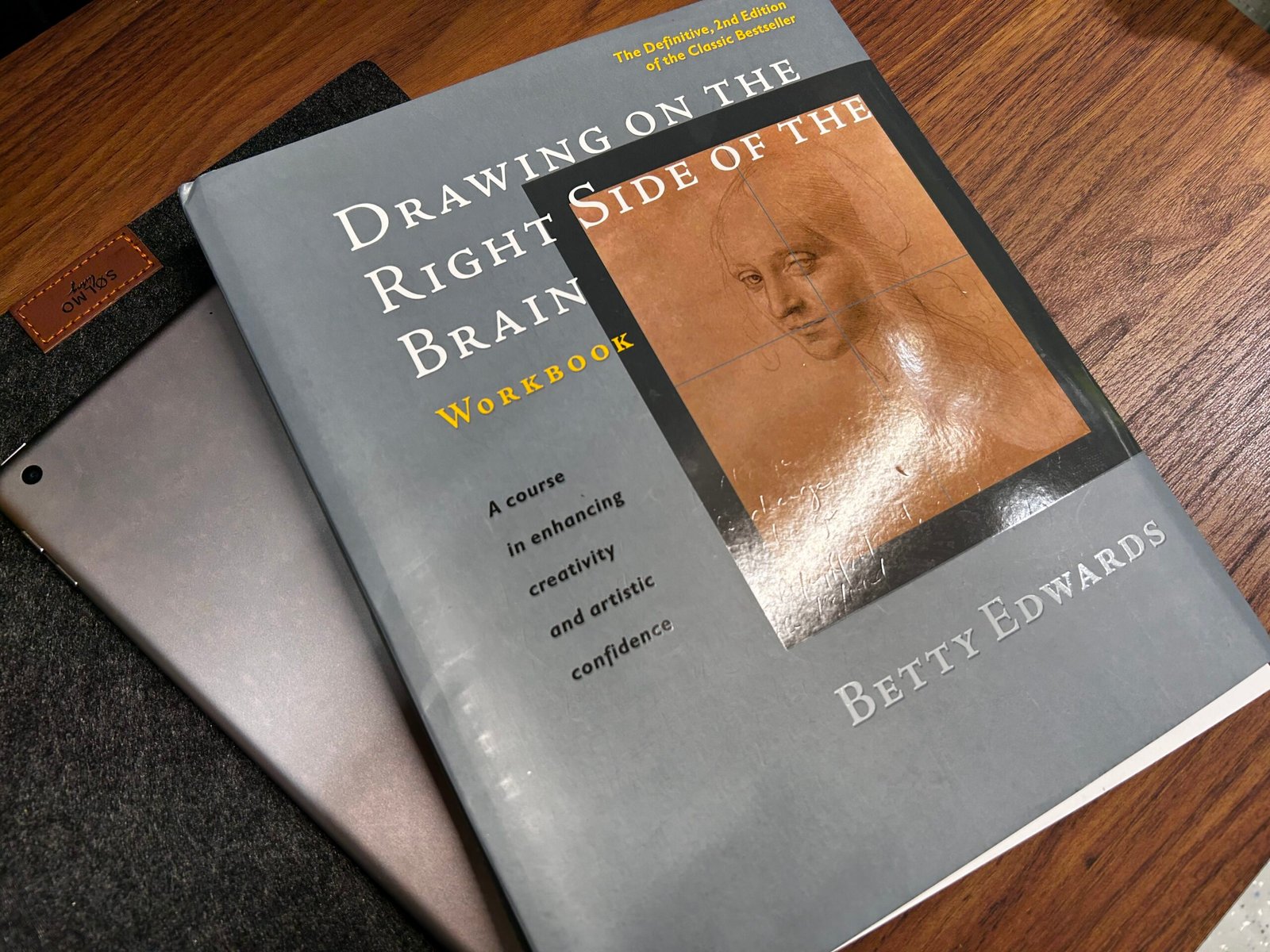
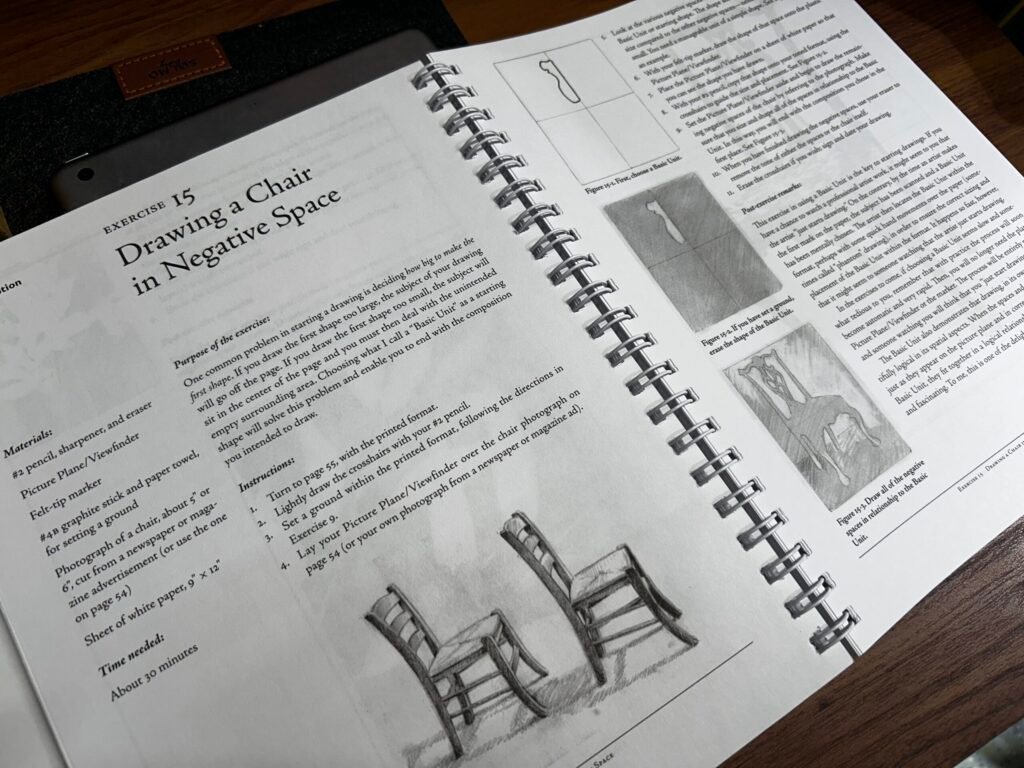
“Drawing on the Right Side of the Brain” by Betty Edwards
Among all of the drawing books for beginners, this is the book that changed how people think about learning to draw. Edwards’ core insight: drawing isn’t about hand skill, it’s about learning to see. The book teaches you to bypass the logical, symbol-making side of your brain and tap into visual processing.
What it teaches: Observation skills, contour drawing, negative space, proportion. Includes the famous upside-down drawing exercise.
Best for: Complete beginners who think they “can’t draw” and need to rewire how they see.
Pro: The exercises genuinely work—people have breakthroughs with this book. The science is accessible.
Con: Can feel a bit dated in tone (first published in 1979, though updated editions exist). Some exercises require specific setups.
Also grab: The companion workbook if you want guided practice sheets.
Get it: Amazon*
“You Can Draw in 30 Days” by Mark Kistler
Mark Kistler is relentlessly positive and makes drawing feel achievable. This book is designed as a 30-day challenge with one lesson per day, each taking about 20 minutes.
What it teaches: Basic 3D shapes, shading, perspective, and drawing everyday objects.
Best for: Total beginners (including kids and teens) who need encouragement and quick wins.
Pro: Confidence-building. The daily structure keeps you accountable.
Con: Leans toward cartoony styles; if you want realism, you’ll need to supplement with other books.
Get it : Amazon*
“Figure Drawing for All It’s Worth” by Andrew Loomis
Andrew Loomis is a legend in art instruction, and this is his most comprehensive book. Originally published in the 1940s, it’s now in the public domain (you can find free PDFs, but the print versions are nicer).
What it teaches: Human proportions, anatomy, construction drawing, and how to draw figures from imagination.
Best for: Intermediate-leaning beginners ready to tackle the human figure seriously.
Pro: Timeless instruction. Loomis breaks down the figure into understandable geometric forms.
Con: Dense. Not a quick read, and the vintage language/examples can feel old-fashioned.
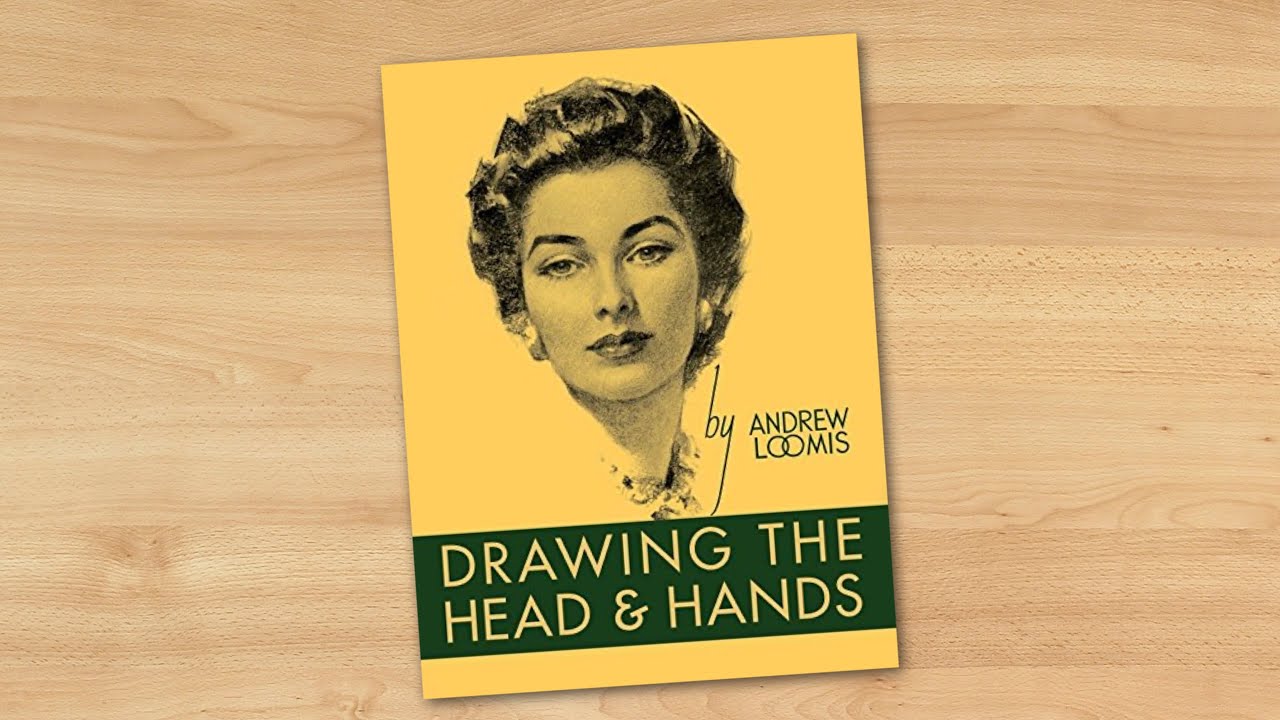
“Drawing the Head and Hands” by Andrew Loomis
Loomis’s companion book focuses on the two hardest parts of the human body to draw: heads and hands.
What it teaches: Facial proportions, different head angles, expressions, and hand structure/gesture.
Best for: Anyone struggling with portraits or hands specifically (which is basically everyone).
Pro: Incredibly detailed. If you study this book, you’ll understand head construction inside and out.
Con: Requires patience and repeated practice. Not a “draw a face in 10 minutes” kind of book.
Get It: Amazon*
“The Complete Book of Drawing” by Barrington Barber
This book tries to cover everything: basic techniques, still life, landscapes, animals, people, and more.
What it teaches: Broad overview of drawing techniques and subjects.
Best for: People who want one reference book they can return to for multiple topics.
Pro: Great value—tons of content. Useful as a long-term reference.
Con: Because it covers so much, it doesn’t go super deep on any one thing.
Get it: Amazon*
“Drawing Lessons from the Great Masters” by Robert Beverly Hale
This book takes a different approach: instead of giving you exercises, it analyzes drawings by Rembrandt, Michelangelo, Rubens, and other masters to show you why they work.
What it teaches: Composition, gesture, anatomy, and design principles by studying masterworks.
Best for: Visual learners who want to understand by seeing, not just reading instructions.
Pro: You learn by looking at incredible art. Builds your visual vocabulary.
Con: Less hands-on than other books—it’s analysis, not step-by-step lessons.
Get it: Amazon*
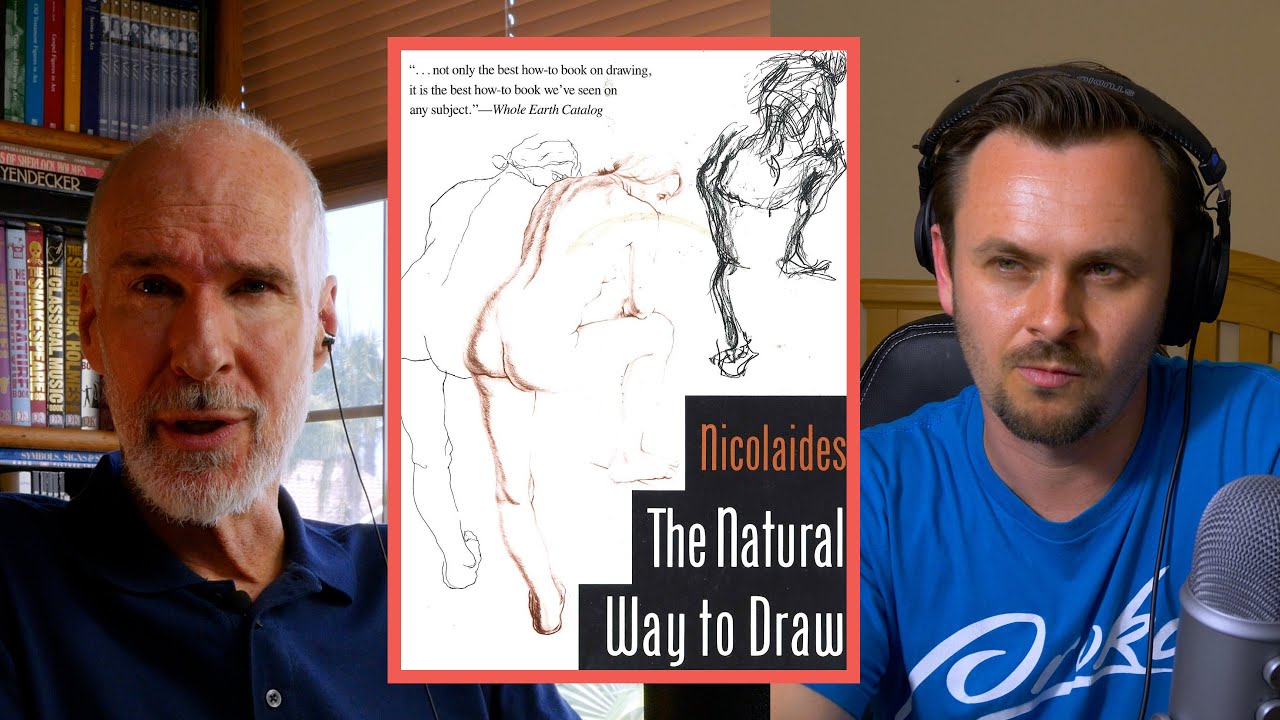
“The Natural Way to Draw” by Kimon Nicholaides
This is the book art schools assign. It’s a one-year, intensive program focused on gesture drawing and contour drawing. Nicolaides doesn’t mess around—he wants you to draw for hours every day.
What it teaches: Observation, gesture, mass, weight, and how to draw what you see, not what you think you see.
Best for: Serious self-learners ready to commit to daily practice. Not a casual read.
Pro: Deeply effective if you follow the program. Builds rock-solid foundational skills.
Con: Extremely demanding. Requires 5+ hours of drawing per week minimum. Can feel overwhelming.
Get it: Amazon*
“Drawing for the Absolute Beginner” by Mark and Mary Willenbrink
This book focuses specifically on pencil techniques—how to hold your pencil, create different textures, shade smoothly, etc.
What it teaches: Pencil control, values, shading techniques, and basic subjects like landscapes and still life.
Best for: Beginners who want to get good at realistic pencil drawing specifically.
Pro: Crystal-clear instructions with great photo references.
Con: Narrower scope than some books—focuses on pencil, not other mediums.
Get it: Amazon*
How to Choose the Right Drawing Book for You
Okay, we have just went over a list of great drawing books for beginners. With 8 different options, how do you pick learn to draw books that are right for you?
If you’re brand new and need confidence: Start with “You Can Draw in 30 Days”. It is gentle, encouraging, and will give you quick wins.
If you want to understand how seeing works: Go with “Drawing on the Right Side of the Brain.” It’ll change how you think about drawing.
If you want a structured program: “The Natural Way to Draw” (just make sure that you’re ready to commit some serious time to it).
If you want to draw people: Start with “Figure Drawing for All It’s Worth” or “Drawing the Head and Hands” (both Loomis).
If you want broad coverage: Grab “The Complete Book of Drawing” as an all-in-one reference.
Can you use multiple books? Absolutely. Many self-taught artists work through 2-3 of these over their first year. You might start with Betty Edwards to learn observation, then move to Bert Dodson for structured exercises, then tackle Loomis when you’re ready for figures.
And here’s a tip: learn to draw books work even better when paired with feedback and community. Join online art groups, post your work, and ask questions.
Conclusion
The best drawing books for beginners aren’t just instruction manuals—they’re mentors you can carry in your backpack. Betty Edwards will teach you to see. Kimon Nicolaides will push you to observe deeply. Andrew Loomis will show you how to construct anything.
Pick one book from this list (or two, if you’re ambitious). Read the introduction tonight. Do the first exercise tomorrow. Don’t overthink it—just start. After you finish your first book, start over with it or grab another book from this list of drawing books for beginners. Keep at it!
In three months, you’ll look back at your first drawings and barely recognize them. The book won’t change, but your drawings will. That’s the magic of learning from the page: the knowledge is there whenever you’re ready to absorb it, at exactly the pace you need.
Now stop reading, go grab your sketchbook and start drawing!
Did you like this article about the best drawing books for beginners? You may like this article about the best art supplies for classroom use.
Table of Contents
Sources Cited:
Mueller, P. A., & Oppenheimer, D. M. (2014). “The Pen Is Mightier Than the Keyboard: Advantages of Longhand Over Laptop Note Taking.” Psychological Science, 25(6), 1159-1168. [This is a real, well-known study about handwriting vs. typing for retention]
Affiliate Notice
This blog post contains affiliate links to products listed on Amazon. Each book listing within this “Top 8 Drawing Books for Beginners” blog post contains an affiliate link. Clicking the link will not cost you anything extra, but will provide a small commission to the author if you make a purchase.
Leave a Reply